

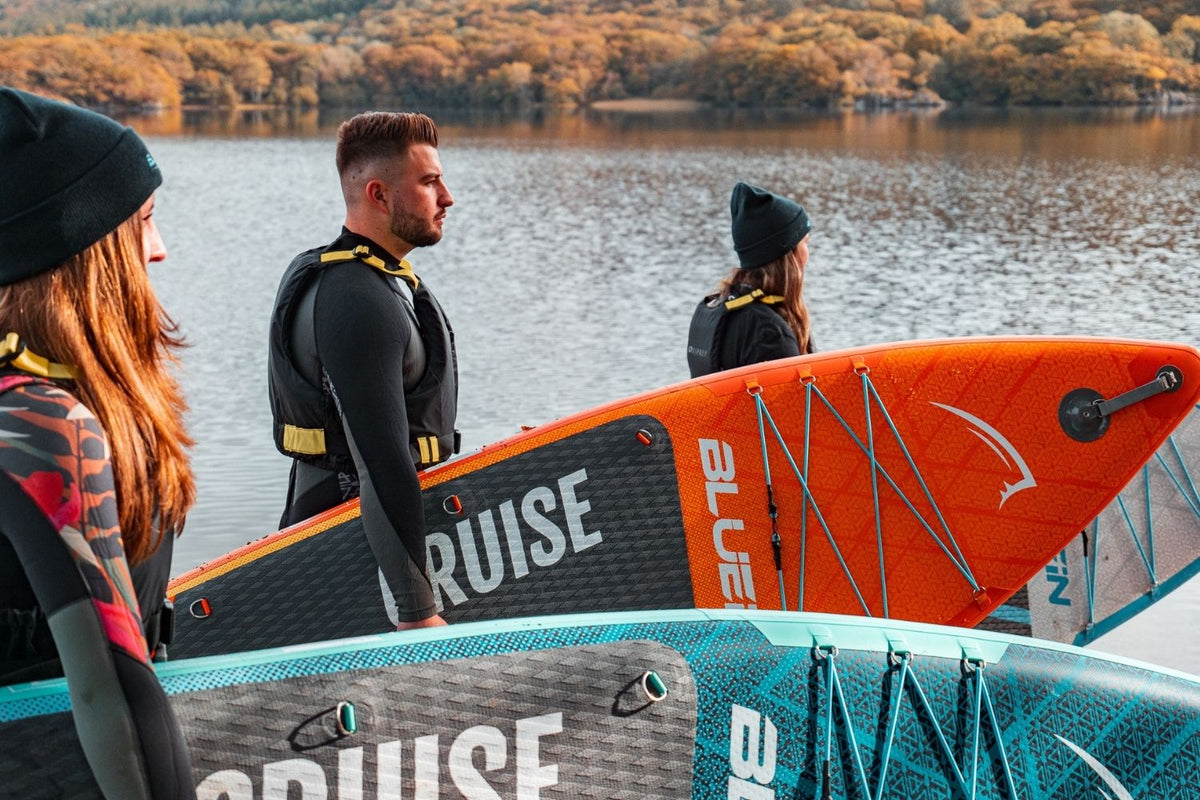

Europe offers an incredible variety of paddleboarding destinations, from the sheltered Mediterranean bays of Spain and Croatia to the clear Alpine lakes of Austria and northern Europe's dramatic coastal waters.
However, paddleboarding safety in Europe requires more than choosing a beautiful location and checking whether the sun is shining.
Different regions experience distinct wind patterns, water temperatures and daylight conditions. A warm Mediterranean morning may develop into a windy afternoon, while an Alpine lake can remain extremely cold even in summer.
These differences affect everything from clothing choices to launch locations and the time you should spend on the water.
Whether you're planning a paddleboarding holiday or exploring waterways closer to home, understanding changing conditions will help you make safer decisions and enjoy each destination with greater confidence.
Why Paddleboarding Safety Varies Across Europe
European paddleboarding environments can differ considerably, even between destinations located relatively close together.
Paddling along a sheltered Greek bay, for example, presents different challenges from exploring a Norwegian fjord or an Austrian mountain lake.
The most important environmental factors include:
- Wind patterns: Coastal breezes, mountain winds and regional weather systems.
- Water temperature: Significant differences between Mediterranean, Alpine and northern waters.
- Daylight: Seasonal variations in sunrise, sunset and overall visibility.
- Local geography: Cliffs, headlands, mountain valleys and narrow waterways.
- Local regulations: Different access rules, equipment requirements and restricted zones.
There is no single set of weather conditions that guarantees safe paddleboarding throughout Europe.
Your equipment, route and expectations should match the specific environment rather than the country or season alone.
Understanding Wind Conditions Across European Paddleboarding Destinations
Wind can be particularly challenging when paddleboarding in unfamiliar locations.
Regional wind patterns may differ from those you're used to, while local geography can create sudden gusts or concentrated areas of stronger wind.
Mediterranean Wind Conditions
The Mediterranean is often associated with calm, warm water, but several regions experience powerful and sometimes persistent winds.
Examples include:
- The Meltemi: A seasonal northerly wind affecting parts of the Aegean Sea, particularly during summer.
- The Mistral: A strong northerly to north-westerly wind associated with southern France and parts of the western Mediterranean.
- The Bora: A potentially powerful, gusty wind affecting parts of the Adriatic coastline.
These winds can create demanding paddleboarding conditions even when the weather is sunny and dry.
For example, a coastal bay may appear sheltered early in the morning, but conditions can become less suitable as the wind strengthens.
Always check local marine forecasts rather than relying on general holiday weather predictions.
Offshore Winds Along European Coastlines
An offshore wind blows away from the land and towards open water.
This can be particularly dangerous for paddleboarders because it may carry them away from a beach faster than they can paddle back.
The risk is not limited to rough seas. Offshore winds can initially make the surface appear unusually calm.
Before launching at a coastal destination:
- Identify the direction of the wind relative to shore.
- Check whether the wind is expected to strengthen.
- Avoid routes that expose you to offshore drift.
- Speak to local instructors or lifeguards about unfamiliar hazards.
- Choose another location or postpone the session when conditions are unsuitable.
Wind on Alpine Lakes
Mountain lakes introduce another set of challenges.
Steep valley sides and surrounding mountains can influence wind direction and intensity, while local breezes may develop throughout the day.
A calm morning on an Alpine lake does not guarantee similar conditions in the afternoon.
In some areas, approaching thunderstorms can also produce sudden strong winds.
Never remain on open water when thunderstorms are approaching.
Wind Speed Guidelines for Recreational SUP
| Wind conditions | Approximate wind speed | Practical guidance |
|---|---|---|
| Calm | 0–8 km/h | Often suitable for learning on sheltered water |
| Light breeze | 9–16 km/h | May be manageable for beginners in appropriate locations |
| Moderate breeze | 17–24 km/h | Increasing difficulty; beginners should generally avoid |
| Freshening wind | 25–32 km/h | Unsuitable for most recreational paddleboarders |
| Stronger wind | Above 32 km/h | Avoid recreational paddleboarding |
These ranges are general illustrations, not absolute safety limits.
Offshore direction, gusts, waves and local geography may make a session unsafe even when average wind speeds are relatively low.

Water Temperature: A Major European Paddleboarding Safety Factor
One of the biggest mistakes paddleboarders make is assuming that warm air means warm water.
Across Europe, water temperatures vary substantially by location, season, depth and recent weather.
Mediterranean Paddleboarding
Coastal waters around Spain, southern France, Italy, Greece and Croatia may become comfortably warm during summer.
However, temperature differences remain important.
Early-season water can be much cooler than expected, and certain coastal locations experience local cooling caused by currents or upwelling.
Even in summer, strong wind can leave wet paddleboarders feeling cold.
Consider:
- Checking actual water temperature before launching.
- Wearing suitable clothing for possible immersion.
- Carrying additional protection if conditions may deteriorate.
- Avoiding prolonged sessions without adequate hydration.
- Applying water-resistant sunscreen and protecting against excessive sun exposure.
Alpine Lakes: Cold Water in Warm Weather
Alpine lakes in countries such as Austria, Slovenia, Italy and Germany are popular paddleboarding destinations.
Many offer stunning scenery and clear water, but mountain lakes can remain cold even when the surrounding air feels warm.
A sunny afternoon does not eliminate the danger of cold water shock.
Cold immersion can cause an involuntary gasp and rapid breathing, increasing the risk of drowning if your airway is submerged.
Always assess water temperature independently from air temperature.
Appropriate thermal clothing, a buoyancy aid and a conservative route are particularly important.
Northern and Baltic European Waters
Paddleboarding in Sweden, Finland, Denmark, Estonia and other northern regions requires careful consideration of seasonal temperatures.
The Baltic Sea and inland lakes can offer excellent summer paddling, but water temperatures may remain low during spring and autumn.
For cold-water sessions:
- Wear suitable thermal protection.
- Avoid paddling alone.
- Keep your route close to accessible shore.
- Allow for increased fatigue.
- Carry an accessible emergency communication device.
- Practise safe recovery techniques in controlled conditions.
Cold-water competence involves being prepared to fall in, not simply being confident that you won't.
Paddleboarding Safety as Daylight Changes
Daylight varies substantially across Europe depending on latitude and season.
In northern Europe, summer evenings can remain bright for extended periods, while winter days may be very short.
Southern European destinations generally experience less extreme seasonal daylight variation.
Regardless of location, limited visibility can make paddleboarding more demanding.
Paddleboarding at Sunrise or Sunset
Sunrise and sunset sessions can be appealing, particularly during hot summer weather.
However, low sunlight can reduce your ability to see obstacles and other water users.
Potential hazards include:
- Glare reflecting from the water.
- Reduced visibility of rocks or shallow areas.
- Difficulty identifying navigation markers.
- Increasing boat traffic at popular destinations.
- Reduced visibility as daylight fades.
- Cooling air temperatures during evening sessions.
How to Plan Around Changing Light
Set a return deadline that allows you to finish well before visibility becomes poor.
Check the exact local sunset time, particularly when travelling between countries or across time zones.
Don't assume that a route will take the same amount of time on the return journey. Wind, fatigue and sightseeing stops can all extend your session.
Daylight should be treated as a limited safety resource, not simply an opportunity to paddle for longer.
Night paddleboarding may be restricted or subject to specific equipment and navigation requirements depending on the country and waterway. Beginners should choose daylight conditions.
Essential Paddleboarding Safety Equipment for Europe
The correct equipment helps reduce risk when weather and water conditions change.
However, equipment requirements may differ between locations.
A Practical European SUP Equipment Checklist
| Equipment | Why it matters |
|---|---|
| Buoyancy aid or suitable PFD | Provides flotation following immersion |
| Correct leash system | Helps manage board separation where leash use is appropriate |
| Waterproof communication device | Allows emergency contact |
| Suitable thermal clothing | Helps protect against cold-water exposure |
| Sun protection | Reduces exposure to strong UV and heat |
| Drinking water | Helps manage hydration |
| Appropriate footwear | Protects feet at rocky or hazardous access points |
| Dry bag | Keeps additional essentials protected |
| Local navigation information | Helps identify restrictions, hazards and landing points |

Leash Rules Can Differ Between Countries
Leash choice is an important example of why European paddleboarding advice cannot be treated as completely uniform.
In relatively still water, a suitable leash helps prevent the board drifting away after a fall.
However, in flowing water, a leash can become trapped around fixed obstacles and create serious entrapment risks.
Always follow local rules and specialist guidance for the waterway. Don't assume that equipment recommended for a calm lake is appropriate for a river or tidal channel.
Choosing a Suitable Paddleboard
When choosing equipment for European paddleboarding, consider where you intend to use it most often.
A recreational board suited to calm lakes may not be the best option for more exposed coastal conditions.
Prioritise:
- Appropriate board stability and dimensions.
- Construction quality and durability.
- Manufacturer-specified load capacity.
- Correct inflation and maintenance.
- Compatibility with suitable safety equipment.
- Ease of transport and storage.
European Paddleboarding Regulations and Local Rules
Paddleboarding rules are not identical across Europe.
Specific waterways may impose regulations covering launch locations, protected areas, navigation zones, safety equipment and distance from shore.
France
France has detailed recreational water-sports guidance, including requirements that vary by the type of water and distance from shore.
For example, certain offshore SUP activities involve additional equipment and operating restrictions.
Paddlers should consult the latest official local guidance rather than assuming all French coastal waters follow the same rules. (sports.gouv.fr)
Spain, Italy and Greece
Mediterranean destinations may have designated swimming zones, harbour restrictions, marine protected areas and local navigation rules.
Check with harbour authorities, lifeguards, authorised activity providers or local maritime agencies before launching.
Germany, Austria and Slovenia
Inland lakes and rivers can have location-specific access requirements, protected areas and navigation restrictions.
Some lakes may restrict access at particular points or times.
Always check the relevant local authority's information before travelling.
Emergency Contact Information in Europe
Across the European Union, 112 is the common emergency telephone number and can be used free of charge to contact emergency services.
Some countries also operate specific maritime emergency systems and additional national numbers. (Your Europe)
Before your session, identify the appropriate local emergency procedure, especially for coastal or remote locations.
Carry your phone on your person in a waterproof pouch rather than relying on equipment attached to your board.
Practical Paddleboarding Scenarios Across Europe
Scenario 1: Summer Paddleboarding in Greece
You're staying near a beautiful Aegean beach and plan a midday paddleboarding session.
The morning begins calmly, but the marine forecast shows stronger northerly winds developing.
Although the temperature remains high, increasingly strong wind could make returning to shore difficult.
Safer decision: Avoid the exposed route and choose a sheltered location only if the forecast and local advice confirm suitable conditions.
Scenario 2: Paddleboarding on an Austrian Lake
You're exploring a mountain lake on a warm summer afternoon.
The air feels comfortable, but the water is cold and local forecasts indicate a chance of thunderstorms.
Safer decision: Wear suitable flotation and thermal protection, monitor the forecast closely and stay off the water if thunderstorms could develop during the session.
Scenario 3: Evening Paddleboarding in Croatia
You begin a relaxed coastal session in a sheltered bay.
As sunset approaches, glare makes it difficult to see rocks near the shoreline. The return route also takes longer than expected.
Safer decision: Plan a short, familiar route and return with ample daylight remaining.
Scenario 4: Autumn Paddleboarding in Sweden
The lake is calm and the surrounding trees create a peaceful setting.
However, both the air and water are cold, and daylight is becoming limited.
Safer decision: Use appropriate cold-water equipment, paddle with a companion and choose a short route with accessible landing points.
How to Check European Paddleboarding Conditions
Checking a general weather forecast isn't enough for many paddling environments.
Before launching, review:
- Wind direction and gusts: Including expected changes throughout the session.
- Water temperature: Particularly in Alpine and northern locations.
- Waves and currents: Where applicable to coastal routes.
- Thunderstorm risk: Especially around mountain lakes and during warmer weather.
- Visibility and sunset: Allowing a conservative return window.
- Local regulations: Including access, permitted routes and equipment requirements.
Use official national meteorological services and local marine or inland-water forecasts.
Where available, consult qualified local instructors who understand regional conditions.
Common Paddleboarding Mistakes to Avoid in Europe
Travelling to a new destination can make familiar paddleboarding routines less reliable.
Common mistakes include:
- Assuming warm weather means safe water: Alpine and northern waters can be cold even in summer.
- Ignoring local wind patterns: Regional winds can make conditions unsuitable despite clear skies.
- Using incorrect leash equipment: Flowing water may require different procedures.
- Paddling too far from shore: Longer return distances leave less margin for unexpected changes.
- Underestimating daylight: Unfamiliar sunset times can make evening routes riskier.
- Failing to check local restrictions: Popular destinations may contain protected or restricted areas.
A conservative approach is especially sensible when paddling somewhere for the first time.
European Paddleboarding Safety Checklist
Before heading onto the water, make sure you can answer the following questions.
- Have I checked the local weather and marine forecast?
- Do I understand the regional wind conditions?
- Am I dressed for the actual water temperature?
- Do I know whether paddleboarding is permitted here?
- Am I using equipment suitable for this particular environment?
- Have I identified safe launch and landing points?
- Do I know the appropriate emergency contact procedure?
- Have I told someone my route and planned return time?
- Can I finish the session before visibility deteriorates?
- Am I prepared to cancel if conditions change?
If several answers are uncertain, seek local advice or postpone the session.

Frequently Asked Questions About Paddleboarding Safety in Europe
Is paddleboarding safe in the Mediterranean?
It can be, provided the conditions are suitable for your ability and equipment. However, strong regional winds, boat traffic and exposed coastlines can present significant hazards.
Can you paddleboard on Alpine lakes?
Yes, where access is permitted and conditions are appropriate. Cold water, sudden wind changes and thunderstorms are particularly important considerations.
Do all European countries have the same paddleboarding rules?
No. Regulations vary by country, region and waterway. Equipment requirements, permitted distances from shore and access restrictions may differ.
Is paddleboarding safe in Europe during autumn?
Autumn paddleboarding can be enjoyable, but colder water, shorter days and changing weather require more conservative planning and suitable equipment.
What emergency number should I use in the EU?
Call 112 in an emergency. For coastal paddling, also familiarise yourself with the local maritime rescue arrangements.
Summary: Paddleboarding Safety Across Europe
Europe offers diverse paddleboarding experiences, but conditions vary greatly between regions.
To reduce unnecessary risk:
- Understand local wind patterns before launching.
- Check water temperature independently from air temperature.
- Wear appropriate flotation and thermal protection.
- Plan your route around available daylight.
- Follow local waterway regulations.
- Use the correct equipment for the environment.
- Stay within your ability and be prepared to cancel.
- Know how to contact emergency services.
Conclusion: Enjoy European Paddleboarding with Confidence
From Mediterranean beaches to Alpine lakes and northern coastlines, Europe offers outstanding opportunities to explore the water.
The key to enjoying these destinations responsibly is understanding that safe conditions are never determined by sunshine or scenery alone.
Wind direction, water temperature, visibility and local regulations all influence what makes a particular session appropriate.
Paddleboarding safety in Europe starts with local knowledge, suitable equipment and a willingness to adapt your plans when conditions change.
Whether you're exploring somewhere new or returning to a familiar destination, careful preparation makes every session more enjoyable and helps you return to shore safely.
Teilen:
Stand-up-Paddling im Oktober in Europa: Tierwelt und malerische Abenteuer