

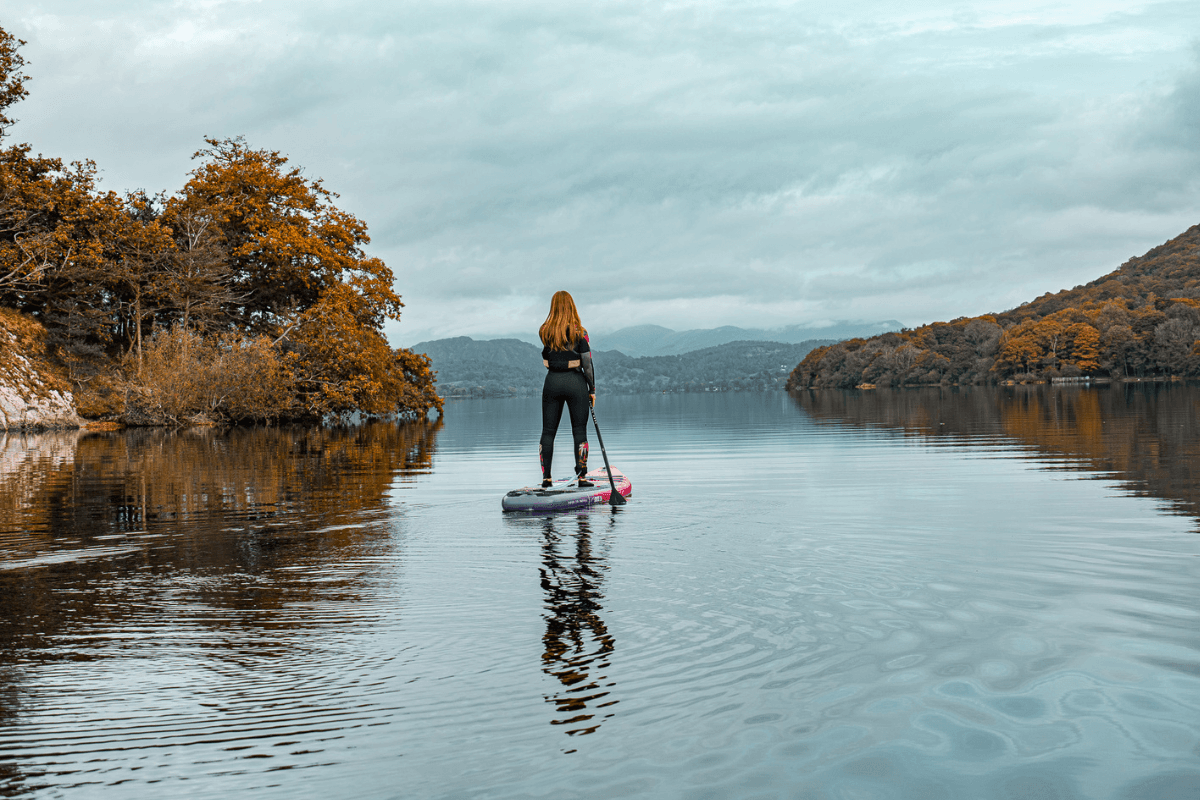

Buying your first SUP is usually about stability, confidence and getting onto the water without making life unnecessarily difficult. A few seasons later, your priorities can look completely different. You might be paddling longer routes, dealing with stronger coastal conditions or becoming increasingly frustrated as friends glide ahead while you work twice as hard. Knowing when to upgrade your paddle board is not simply a question of how old it is. A well-made inflatable SUP can remain useful for years when it is cared for properly. The more important question is whether its shape, performance, capacity and condition still match the way you paddle today. Sometimes you need a new board. Sometimes you only need a better fin, paddle, repair or change in technique.
Here are seven practical signs that you may genuinely have outgrown your SUP.
When to Upgrade Your Paddle Board: Start With What Has Changed
Before replacing anything, think about the difference between the paddler who bought your current board and the paddler you are now. Perhaps your first summer consisted of short trips around a sheltered lake. Now you are considering ten-kilometre routes. Perhaps you originally wanted maximum stability. Now you are prepared to trade some width for better glide and speed. Or perhaps you have started carrying camping equipment, paddling with a child or exploring more exposed water.
That change matters because different SUP shapes solve different problems. A wide all-round board can be an excellent first board because it provides a forgiving platform. A narrower or longer performance-orientated SUP can become more attractive once efficiency, tracking or distance matter more. The important point is this: Do not upgrade because your SUP is no longer new. Upgrade because your paddling requirements have changed.
1. You Constantly Feel Like Your Paddle Board Is Too Slow
One of the first signs you have outgrown a beginner SUP is feeling as though you are working hard without travelling particularly far. All-round paddle boards generally prioritise stability and versatility. That is useful when you are learning because a wider platform makes balancing easier. As your technique improves, however, you may notice the compromise.
You might find that:
- Friends on longer boards travel noticeably further per stroke.
- Maintaining a comfortable touring pace feels harder than it should.
- The board loses momentum quickly when you stop paddling.
- Longer journeys involve far more strokes than expected.
- You want to use your SUP for fitness or faster sessions.
Board shape influences efficiency through the water. Longer, narrower and more streamlined boards are generally better suited to covering distance than broad recreational designs. That does not automatically mean narrowest equals best. Stability still matters. A board that is theoretically fast but leaves you constantly correcting your balance will not necessarily make you faster in real conditions.
When Speed Becomes a Good Reason to Upgrade
Think about your typical session rather than your fastest ever paddle. If most outings are still short, social and relaxed, an all-round SUP could remain ideal. If you now deliberately train for pace, regularly paddle longer distances or want to enter SUP events, a performance-focused design becomes much easier to justify.
2. You Spend Too Much Time Correcting Your Direction
A paddle board never travels perfectly straight indefinitely. Wind, current, technique, fin choice and board design all influence tracking. But there is a difference between occasional steering corrections and feeling as though every few strokes require another change of side. As your technique improves, tracking becomes much easier to assess objectively. If you can paddle efficiently but your current board still feels reluctant to hold a line, you may benefit from a longer touring-orientated SUP.
Typical signs include:
- Constantly switching your paddle from side to side.
- Losing speed every time you correct direction.
- Struggling to maintain a straight course over longer distances.
- Finding crosswinds disproportionately frustrating.
- Feeling that the board turns easily but does not glide efficiently.
Shorter recreational boards tend to prioritise manoeuvrability and convenience. Longer touring boards generally place greater emphasis on straight-line efficiency. That distinction becomes increasingly important when your idea of a paddle changes from twenty minutes around a bay to several hours exploring a coastline, river or lake.
3. Your Paddleboarding Distances Keep Increasing
Progress often changes your relationship with distance. Your first few trips might involve staying within easy reach of your launch point. Once your confidence improves, you start connecting sections of coastline, circumnavigating lakes or planning full-day routes. At that stage, every small inefficiency becomes more noticeable. A board that feels completely acceptable across two kilometres may become frustrating across twelve.
For longer journeys, paddlers usually begin placing more importance on:
- efficient glide
- reliable tracking
- comfortable deck space
- cargo capacity
- predictable handling
- lower paddling effort over distance
This is where a dedicated touring SUP can make more sense than an all-round board. The Bluefin Rogue, for example, is positioned specifically towards longer journeys, carrying equipment and efficient straight-line paddling rather than simply general recreational use. If exploring further has become the reason you paddle, your next board should reflect that.
4. Your Current SUP No Longer Matches the Conditions You Paddle In
The best paddle board is not simply determined by skill level. Where you paddle matters just as much. UK and European paddlers can encounter substantially different conditions between an inland reservoir, slow-moving river, exposed coastal bay and open lake.
A stable all-rounder may still be your preferred option on relaxed family days. But if your paddling increasingly involves distance, chop, wind or coastal exploration, you may start wanting a more specialised board. Think about the conditions in which you now spend most of your time.
Sheltered Lakes and Casual Paddling
Stability and versatility often remain more useful than outright speed. A well-designed all-round SUP can continue serving experienced paddlers perfectly well when the objective is relaxed recreation.
Long Inland Routes
Coastal Paddling
Real coastal paddling places greater emphasis on judgement, route planning and appropriate safety equipment as well as board choice. Your SUP should suit the conditions you are competent and prepared to paddle in not encourage you into conditions beyond your experience. We would recommend choosing equipment that works across realistic mixed conditions rather than only performing well on an ideal day.
5. You Need More Space for Equipment
Your first SUP session probably did not involve much cargo. Then paddleboarding becomes a bigger part of your weekends.
Suddenly there is:
- a dry bag
- spare clothing
- food and water
- safety equipment
- footwear
- a phone or camera
- overnight kit
- potentially equipment for a child or passenger
An overloaded recreational board can become less comfortable and less enjoyable to paddle.
More equipment changes how your board sits and behaves on the water. Before upgrading, always check the manufacturer's recommended capacity for your particular SUP. Never assume that a physically large deck automatically means the board is suitable for whatever load you can fit onto it. If carrying equipment has become part of almost every trip, look for a board designed with touring and cargo use in mind rather than simply choosing another general-purpose model.
A Real-World Example
Imagine two paddlers.
Paddler A spends Sunday mornings doing 45-minute circuits around a local lake.
Paddler B now packs lunch, spare layers, a dry bag and safety kit for several-hour exploratory routes.
Even if they have identical skill levels, they no longer need the same board. That is why upgrading should be driven by use case rather than status.

6. Your Skills Have Progressed Beyond a Beginner All-Round SUP
Beginner boards are designed to remove barriers. They tend to prioritise stability, predictable behaviour and versatility because those characteristics help you develop the fundamentals. That is exactly what a first SUP should do. The mistake is assuming that becoming more experienced automatically makes your existing board obsolete. It does not. You have probably outgrown it only when its beginner-friendly compromises start getting in the way of something specific you want to achieve.
For example, perhaps you now want to:
- train at higher speeds
- improve stroke efficiency
- cover considerably longer routes
- participate in organised races
- practise more advanced turns
- paddle a specialist discipline
- carry equipment on day tours
The upgrade should unlock a new type of paddling rather than simply give you a more expensive version of your existing experience. A speed-focused SUP such as the current Bluefin Sprint is aimed at confident paddlers wanting greater pace, glide and performance, whereas the Cruise remains positioned as a stable, versatile all-round design. That difference is exactly what progression should look like: choosing a board around a clearer objective.
7. Your Paddle Board Is Becoming Unreliable or Seriously Worn
Not every paddle board upgrade is about performance. Eventually, condition matters. Inflatable SUPs deal with repeated inflation, deflation, transportation, storage, sunlight, salt, sand and contact with shorelines. Good maintenance can help extend their useful life, but no piece of outdoor equipment lasts indefinitely.
Inspect your board regularly for:
- unusual air loss
- damaged or heavily worn seams
- valve problems
- significant cuts or abrasions
- bubbling or separation
- degraded deck-pad areas
- damaged fin boxes
- persistent problems that have already been repaired
A cosmetic scuff is not necessarily a reason to replace an entire SUP. A structural concern is different. Bluefin recommends cleaning and thoroughly drying SUP equipment before storage, inspecting boards for leaks, seam wear or bubbling and checking accessories such as fins, paddles and leashes for deterioration. Never keep using a board you believe may be structurally unsafe simply to squeeze another season from it. Where there is doubt, contact the manufacturer or an appropriate SUP repair professional before returning to the water.
Upgrade or Repair? How to Make the Right Decision
Replacing a paddle board at the first sign of wear is neither economical nor particularly sustainable. Minor faults can sometimes be addressed without replacing the entire product.
Consider repair or maintenance first when:
- the problem is isolated and repairable
- your board still suits your current paddling
- you are otherwise happy with its performance
- an accessory rather than the board is causing the problem
- poor storage or setup can be corrected
Consider upgrading when:
- your paddling discipline has fundamentally changed
- you consistently need better tracking or efficiency
- you require considerably more cargo capacity
- your existing board's intended use no longer matches yours
- structural deterioration makes continued use inappropriate
This distinction matters. The most sustainable upgrade is often the one made for a genuine reason and followed by keeping the new board in service for as long as practical.
What Type of Paddle Board Should You Upgrade To?
Once you have decided an upgrade is justified, avoid immediately shopping according to price.
Start with your biggest limitation.
| Your Current Problem | Type of SUP to Consider | Main Priority |
|---|---|---|
| Current board feels slow | Performance/touring SUP | Glide and efficiency |
| Poor straight-line tracking | Longer touring design | Tracking |
| Carrying more kit | Touring SUP with useful cargo space | Capacity |
| Want to race or train faster | Race/performance SUP | Speed |
| Want increased stiffness and premium construction | Performance all-round SUP | Rigidity and responsiveness |
| Need maximum versatility | Quality all-round SUP | Stability and adaptability |
| Existing board is cumbersome to transport | Lightweight inflatable SUP | Portability |
There is no universally correct progression path. Your next paddle board should solve the limitation you notice most often.

Which Bluefin Paddle Board Could Be Your Next Step?
Cruise: Stay Versatile
If your existing board is basic rather than inherently unsuitable, moving to a higher-quality all-rounder can still be a meaningful upgrade. The Bluefin Cruise 10'8 is positioned as a versatile, stable all-round SUP for a broad range of paddlers and conditions. The current generation also uses a lighter construction than its predecessor. It makes most sense when you still value balance, predictable handling and general-purpose paddling over specialisation.
Carbon: Upgrade Stiffness and Performance
Experienced paddlers who enjoy all-round paddling but want a more performance-focused setup may prefer the Bluefin Carbon 12'. Bluefin positions the current Carbon around increased stiffness, dual-chamber construction and a more premium performance feel. This type of upgrade suits someone who does not necessarily want a race board but has become more demanding about how their SUP responds underfoot.
Rogue: Start Going Further
If your progression is mostly about distance, cargo and longer adventures, a touring design becomes the logical next step. The Bluefin Rogue 12'6 is designed around longer-distance paddling, additional gear capacity and efficient tracking. That makes it better aligned with day trips and exploratory routes than a board selected primarily for casual recreation.
Sprint: Prioritise Speed
If your reason for upgrading can be summarised in one word faster look towards a more dedicated performance board. The Bluefin Sprint 14' is Bluefin's speed-focused option, intended for confident paddlers interested in quicker sessions, fitness paddling and performance. It is a specialist progression rather than the obvious choice for every paddler.
Common Paddle Board Upgrade Mistakes
Buying a more advanced SUP does not guarantee a better paddling experience.
Avoid these common mistakes.
1. Going Too Narrow Too Quickly
Reducing width can improve performance, but there is little advantage in a fast board if you cannot relax enough to paddle it efficiently. Choose progression, not punishment.
2. Buying for the Paddler You Hope to Become
Be ambitious, but buy primarily for what you actually do. If 90% of your paddling consists of relaxed lake sessions, an extreme race design may spend more time frustrating you than improving your weekends.
3. Ignoring Transport and Storage
A brilliant board that is awkward to carry, store or transport may result in fewer days on the water. Convenience is part of performance in real life.
4. Blaming the Board for Technique Problems
Poor tracking can come from inconsistent stroke mechanics. Slow progress can result from inefficient paddling. Instability can sometimes be improved enormously through practice. Before spending money, consider whether a lesson or focused skills session might solve the problem first.
5. Assuming More Expensive Automatically Means Better
A premium specialist SUP can be superb at its intended purpose and completely unnecessary for yours. Fit matters more than price.
Quick Checklist: Have You Actually Outgrown Your SUP?
Ask yourself these questions before upgrading:
- Do I regularly wish my board were faster or more efficient?
- Am I paddling substantially further than when I bought it?
- Do I now carry considerably more gear?
- Has my preferred type of paddling changed?
- Am I confident enough to benefit from a more performance-focused shape?
- Does my current board struggle to meet a specific need repeatedly?
- Is its physical condition becoming a genuine concern?
- Would better technique or an accessory upgrade solve the issue instead?
- Can I clearly explain what I want my next board to do better?
If you cannot answer the final question, keep paddling your current board for a little longer. A useful upgrade should have a clear purpose.
Summary: 7 Signs It May Be Time to Upgrade Your Paddle Board
You may have outgrown your SUP if:
- It consistently feels too slow for the way you now paddle.
- Tracking limitations are making longer routes inefficient.
- Your average paddling distance has increased significantly.
- You are regularly using your SUP in different conditions.
- You need more space and capacity for equipment.
- Your skills and goals now require a more specialist board.
- Wear or structural problems are making the current board unreliable.
None of these automatically means you need the most technical SUP available. For some paddlers, the right progression is simply a better all-rounder. For others, it means moving towards touring, increased stiffness or a genuinely speed-focused board. The key is matching equipment to experience.
Conclusion: Upgrade When Your Paddle Board Stops Matching Your Paddling
There is no fixed number of years after which every SUP should be replaced. A board that is cared for properly and continues to suit its owner's needs may remain a perfectly good choice long after newer models appear. Knowing when to upgrade your paddle board comes down to recognising a persistent mismatch between the equipment you own and the paddling you now want to do. If your current SUP still feels stable, enjoyable and appropriate, keep using it.
If every session leaves you wishing for better glide, longer-distance efficiency, more cargo space or more specialised performance, then you have a much stronger reason to start looking at the next step. The right upgrade should not simply feel newer. It should make the type of paddleboarding you already love easier to pursue.
Find the SUP That Matches Your Next Adventure
Ready to move beyond your current setup?
Compare all-round, touring and performance-focused Bluefin boards based on how you actually paddle, rather than simply choosing the most advanced option available.
Teilen:
5 Reasons to Keep Paddleboarding After Summer in Europe
Quiet Paddleboarding Destinations Europe: Where to SUP After Peak Season